Online gambling companies struggle to clear EU hurdles


LONDON (Reuters) – A partnership stuck on Friday between bwin.party Digital Entertainment and a Belgian casino group has defused one of many disputes pitting online gambling companies against governments across Europe.


The agreement came a month after bwin.party’s co-CEO was questioned by Belgian authorities in an escalating license dispute the company said was costing it 700,000 euros ($ 916,000) in monthly revenue.


By joining forces with Belcasinos, a unit of local casino owner Group Partouche, bwin.party neatly met a requirement to have a presence in Belgium to win a license for online poker, casino and sports betting.


The agreement is a rare bright spot in a tough regulatory environment for online gambling companies across the continent.


Betting online on sports events or playing poker on the Internet are increasingly popular pastimes in Europe, where operators say they are held back by unfair and discriminatory rules in many European Union countries.


“It is not a European Union in any way, it is a patchwork of different countries who happen to be in the EU,” said Professor Leighton Vaughan Williams, director of the betting research unit at Nottingham Business School in central England.


“Different countries have different vested interests and different ideas they are trying to promote. Are they trying to protect consumers or to maximize their tax take?” he said.


The 27 EU member states retain the right to regulate their gambling sectors as they see fit, but rules must comply with EU law, broadly meaning they must be consistent and proportionate.


Some companies are scaling back activities in European markets where, they say, regulatory risks are too high or tax rates are punitive.


Betting exchange operator Betfair for instance said this week it was halting marketing and investment in unregulated markets, including EU members Cyprus, Germany and Greece.


William Hill, Britain‘s largest bookmaker, has joined Betfair in pulling out of Greece and has also stopped offering sports betting to German residents because of a 5 percent turnover tax.


STAKES RISE


The stakes are high. Online gambling is growing at an annual rate of almost 15 percent in the EU and will be worth an estimated 13 billion euros ($ 17 billion) by 2015, according to EU figures.


The European Commission, the EU’s executive, stepped in to the debate in October when it published a medium-term plan to clarify regulations and promote cooperation between member states, ruling out EU-wide legislation for the time being.


“All citizens must be adequately protected, money laundering and fraud must be prevented, sport must be safeguarded against betting-related match-fixing and national rules must comply with EU law,” Internal Market and Services Commissioner Michel Barnier said, setting out his approach.


The online operators accuse the European Commission of failing to follow through properly on complaints lodged about regulation in no fewer than 20 or the 27 EU member states.


Barnier has written to member states accused of breaching EU law in the way they handle gambling, seeking an update on the situation by the end of the year.


However, the industry questions whether the EU will go into battle over gambling when it is facing so many other problems.


“They will chip away at some of the most blatant ones,” said Clive Hawkswood, chief executive of trade body the Remote Gambling Association. “What we really need is for them to take some to the European Court and take enforcement action.”


BRITISH TAXES


Gambling companies themselves have taken advantage of different tax regimes where they work in their favor.


This is illustrated in Britain, historically the biggest betting market in Europe and a place with a well-developed gambling culture where bookmakers have operated in town centers for 50 years.


In recent years, most betting companies have moved their British online betting operations to Britain’s overseas territory of Gibraltar. There they are sheltered from a 15 percent tax on gross profit faced by operators based in Britain.


New legislation will close off that loophole after 2014. The shift to a taxation model based on the location of the consumer was expected to cost gambling companies as much as 270 million pounds ($ 435 million) by 2016-17.


Analyst Nick Batram at brokerage Peel Hunt said smaller players would likely be picked off because of the impact of higher tax and regulatory burdens across Europe.


“It is getting more complicated and more expensive. There is more change afoot but it should ultimately play into the hands of the better-capitalized companies.”


In that vein, William Hill has provisionally agreed a 485 million pound takeover of smaller rival Sportingbet, keen to get its hands on the company’s regulated Australian betting business.


“I think there is a lot more M&A activity to come,” said Batram.


(Additional reporting by Rosalba O’Brien; Editing by David Holmes)


Internet News Headlines – Yahoo! News


Read More..

Jane Krakowski: Santa Made My Son Scream


Celebrity Baby Blog


12/13/2012 at 04:00 PM ET


Jack Osbourne Respectfully Declines More Baby Gifts
Neilson Barnard/Getty


Not everyone finds Santa Claus so jolly — namely, Jane Krakowski‘s 20-month-old son, Bennett Robert.


“We went and saw Santa for the first time last weekend,” the actress told PEOPLE at a Bank of America charity event on Wednesday. “We have the classic screaming by the Santa Claus photo. I love it.”


But with Bennett’s latest craze over clothes, St. Nick has it easy when it comes to the toddler’s wish list.


“I don’t know if it’s just his age or because of his parents, but he enjoys getting clothes as gifts,” Krakowski, 44, explains. “Maybe he doesn’t realize that toys are more fun! When he gets a new sweater, he hugs it.”


It’s a busy time of year for the star — who finishes filming the final season of 30 Rock on Dec. 17 — as she prepares to host Christmas dinner at her home for the first time.


But the ending of an era is bittersweet for Krakowski. While she’ll now have extra time with Bennett, the first-time mom found the balance of her professional and personal lives doable during the show’s run.


“It’s been great because I work with other working moms, and Tina Fey is a great example of a multitasking working mom,” she says. “[When 30 Rock is over], I’ll be what they call a stay-at-home actress.”


One thing’s for sure: Krakowski certainly has a lot of love at home to return to.


“The other day [Bennett] grabbed my face and gave me a kiss for the first time,” she shares. “Like he understood what a kiss was. I was like, ‘Okay, that’s it! That’s the whole thing!’”

– Shakthi Jothianandan


Read More..

Fewer health care options for illegal immigrants


ALAMO, Texas (AP) — For years, Sonia Limas would drag her daughters to the emergency room whenever they fell sick. As an illegal immigrant, she had no health insurance, and the only place she knew to seek treatment was the hospital — the most expensive setting for those covering the cost.


The family's options improved somewhat a decade ago with the expansion of community health clinics, which offered free or low-cost care with help from the federal government. But President Barack Obama's health care overhaul threatens to roll back some of those services if clinics and hospitals are overwhelmed with newly insured patients and can't afford to care for as many poor families.


To be clear, Obama's law was never intended to help Limas and an estimated 11 million illegal immigrants like her. Instead, it envisions that 32 million uninsured Americans will get access to coverage by 2019. Because that should mean fewer uninsured patients showing up at hospitals, the Obama program slashed the federal reimbursement for uncompensated care.


But in states with large illegal immigrant populations, the math may not work, especially if lawmakers don't expand Medicaid, the joint state-federal health program for the poor and disabled.


When the reform has been fully implemented, illegal immigrants will make up the nation's second-largest population of uninsured, or about 25 percent. The only larger group will be people who qualify for insurance but fail to enroll, according to a 2012 study by the Washington-based Urban Institute.


And since about two-thirds of illegal immigrants live in just eight states, those areas will have a disproportionate share of the uninsured to care for.


In communities "where the number of undocumented immigrants is greatest, the strain has reached the breaking point," Rich Umbdenstock, president of the American Hospital Association, wrote last year in a letter to Obama, asking him to keep in mind the uncompensated care hospitals gave to that group. "In response, many hospitals have had to curtail services, delay implementing services, or close beds."


The federal government has offered to expand Medicaid, but states must decide whether to take the deal. And in some of those eight states — including Texas, Florida and New Jersey — hospitals are scrambling to determine whether they will still have enough money to treat the remaining uninsured.


Without a Medicaid expansion, the influx of new patients and the looming cuts in federal funding could inflict "a double whammy" in Texas, said David Lopez, CEO of the Harris Health System in Houston, which spends 10 to 15 percent of its $1.2 billion annual budget to care for illegal immigrants.


Realistically, taxpayers are already paying for some of the treatment provided to illegal immigrants because hospitals are required by law to stabilize and treat any patients that arrive in an emergency room, regardless of their ability to pay. The money to cover the costs typically comes from federal, state and local taxes.


A solid accounting of money spent treating illegal immigrants is elusive because most hospitals do not ask for immigration status. But some states have tried.


California, which is home to the nation's largest population of illegal immigrants, spent an estimated $1.2 billion last year through Medicaid to care for 822,500 illegal immigrants.


The New Jersey Hospital Association in 2010 estimated that it cost between $600 million and $650 million annually to treat 550,000 illegal immigrants.


And in Texas, a 2010 analysis by the Health and Human Services Commission found that the agency had provided $96 million in benefits to illegal immigrants, up from $81 million two years earlier. The state's public hospital districts spent an additional $717 million in uncompensated care to treat that population.


If large states such as Florida and Texas make good on their intention to forgo federal money to expand Medicaid, the decision "basically eviscerates" the effects of the health care overhaul in those areas because of "who lives there and what they're eligible for," said Lisa Clemans-Cope, a senior researcher at the Urban Institute.


Seeking to curb expenses, hospitals might change what qualifies as an emergency or cap the number of uninsured patients they treat. And although it's believed states with the most illegal immigrants will face a smaller cut, they will still lose money.


The potential impacts of reform are a hot topic at MD Anderson Cancer Center in Houston. In addition to offering its own charity care, some MD Anderson oncologists volunteer at a county-funded clinic at Lyndon B. Johnson General Hospital that largely treats the uninsured.


"In a sense we've been in the worst-case scenario in Texas for a long time," said Lewis Foxhall, MD Anderson's vice president of health policy in Houston. "The large number of uninsured and the large low-income population creates a very difficult problem for us."


Community clinics are a key part of the reform plan and were supposed to take up some of the slack for hospitals. Clinics received $11 billion in new funding over five years so they could expand to help care for a swell of newly insured who might otherwise overwhelm doctors' offices. But in the first year, $600 million was cut from the centers' usual allocation, leaving many to use the money to fill gaps rather than expand.


There is concern that clinics could themselves be inundated with newly insured patients, forcing many illegal immigrants back to emergency rooms.


Limas, 44, moved to the border town of Alamo 13 years ago with her husband and three daughters. Now single, she supports the family by teaching a citizenship class in Spanish at the local community center and selling cookies and cakes she whips up in her trailer. Soon, she hopes to seek a work permit of her own.


For now, the clinic helps with basic health care needs. If necessary, Limas will return to the emergency room, where the attendants help her fill out paperwork to ensure the government covers the bills she cannot afford.


"They always attended to me," she said, "even though it's slow."


___


Sherman can be followed on Twitter at https://twitter.com/chrisshermanAP .


Plushnick-Masti can be followed on Twitter at https://twitter.com/RamitMastiAP .


Read More..

The last call for a skid row era at King Eddy Saloon


Wire-thin and slumped like a question mark, James Maley nurses a watered-down whiskey at the battered bar inside the King Eddy Saloon. Around him a boisterous crowd presses in. Maley taps a cracked fingernail nervously on his glass and stares warily at the newcomers.


They've come to see novelist John Fante's son, Dan Fante, read at the bar that inspired his father's 1939 classic "Ask the Dust." They're also here to experience skid row's last dive bar before it shuts down for renovations on Sunday.


"If this happened every day, I would never show up," says Maley, who lives in transitional housing a few blocks away.


Other time-worn regulars, many with leathery skin, bad teeth and watchful eyes, nod in agreement. The bar provides home and family for those who have neither. They come for community and to spend what little money they have on plastic pitchers of beer and $2.50 gin and tonics.


PHOTOS: Last Call at King Eddy Saloon


When the Fante reading ends, the interlopers quickly disperse.


"There go the slummers," says John Tottenham, a poet who has been coming to the King Eddy since the 1980s.


Chances are the crowds will be back when the bar reopens under new management. The owners plan to use old photos to restore the bar's Midcentury look. They hope to renovate the abandoned speak-easy in the basement and open the bar's windows that are covered by stucco, letting natural light into the place for the first time in decades.


They haven't finalized their plans, but one thing is for sure. Drinks won't come cheap at the new King Eddy.


The bar is located on the corner of 5th and Los Angeles streets in the King Edward Hotel, which was built in 1906 and was a tony destination for visitors to what was once a thriving commercial district. The hotel now provides low-income housing for many of King Eddy's regulars.


The pre-Prohibition era King Eddy is painted black. With neon beer signs providing most of its light, the room is dim and gloomy. Its black-and-white checkered floor is grimy. Plastic beer flags hang from the ceiling and the place smells of stale smoke and disinfectant.


The bar itself, shaped in a square, commands the center of the room, with cracked vinyl banquettes lining the perimeter. A glassed-in smoking space is set off to the side. Behind the bar is a tiny fluorescent-lighted kitchen where prepackaged burgers, pizza and sandwiches are heated in a microwave. A beer and burrito would set a person back only $4.


Next week, Maley and the other dislodged drinkers will have to find another bar, but they face a new downtown landscape of high-end mixology bars, restaurants and Brazilian waxing salons.


"I haven't the faintest idea where they'll go," says bar manager Bill Roller, 75, who has worked at the King Eddy for more than 30 years.


King Eddy opened in 1933 and has one of the oldest liquor licenses in the city. It was favored not only by Fante, but also by writers such as Charles Bukowski and James M. Cain for its lack of pretension and colorful clientele.


PHOTOS: Last Call at King Eddy Saloon


"The King Eddy Saloon is the last stand in a world that's completely lost to us — and that's skid row in the 1950s sense, a place where itinerant and semi-skilled laborers could find work seasonally," says downtown historian Richard Schave, who founded the Los Angeles Visionaries Assn., which staged the Fante event.


The bar has been owned by the same family for three generations. Dustin Croick took over in 2008 after his father, Rob, was badly injured in a car accident on his way home from the bar one night. Rob Croick, who has since died, managed the King Eddy for his father, Babe, who bought the bar in the 1960s with money he earned running downtown parking lots.


"This place has been a dive bar since I've been coming here as a kid with my dad, ordering milk and sitting on that stool," says Dustin Croick, 27.


In recent years, Croick has been trying to attract a more mainstream clientele. He started a website that played up the bar's hard-luck roots and featured a catchphrase he coined: "Where nobody gives a … about your name." He tried to lure the producers of the television show "Bar Rescue" to shoot a segment there, but the building's previous owners would not allow the filming.


Read More..

IHT Rendezvous: 'Secret' Arms Deals Provoke Germans

LONDON — There is at least one European export sector that continues to find a ready market around the world — weapons.

In the week in which the European Union received the Nobel Prize for Peace in Oslo, protestors in the Norwegian capital were not alone in pointing out the irony that its member states account for a third of global arms exports.

It is an irony that has a particular resonance in Germany right now, where the government’s decisions on a series of weapons deals have created unease among parliamentarians who complain they were kept in the dark.

Chancellor Angela Merkel, who was among the European leaders in Oslo for Monday’s Nobel award ceremony, has been described as the architect of a new doctrine to boost the country’s weapon sales.

“Germany used to be extremely careful about where it exported its weapons,” wrote Der Spiegel, the German magazine, which has been at the forefront of revelations about Berlin’s weapons policy. “In recent years, however, Chancellor Angela Merkel has shown a preference for sending high-tech armaments abroad rather than German soldiers — even if that means doing business with questionable regimes.”

Legislators and German media have seized on the magazine’s reporting of a secretive federal security committee, chaired by Ms. Merkel, allegedly involved in discussions of high-tech arms sales to countries that include Saudi Arabia, Qatar and Israel.

The latest is the possible sale of state-of-the-art Boxer armored vehicles to the Saudi Royal Guard, which is responsible for protecting the royal family.

Berlin has already approved the sale of up to 270 Leopard 2 tanks to the kingdom in a deal that provoked a fierce debate in Germany.

“Merkel wants to bolster countries that — at least from the German point of view — can provide for stability in their regions,” according to Der Spiegel, which warned it was a risky policy.

But the argument for boosting German weapons exports is economic as much as it is strategic.

“At the end of the day, it’s elementary budgeting,” according to Ben Knight of Deutsche Welle, the German broadcaster.

“Germany, along with most European countries, is in the middle of making drastic cuts in order to bring down its national debt,” he wrote last week. “So instead of costly military operations in the world’s many conflict zones, it has apparently decided to sell more weapons to ‘partner countries’ in those regions. What was once hefty expenditure suddenly becomes vast revenue.”

The so-called Merkel Doctrine has prompted an inevitable backlash from peace advocates and others concerned that German weapons could be used to suppress civil unrest.

Jürgen Grässlin, spokesman for a campaign that opposes arms exports, told Deutsche Welle, “The German government is essentially abetting mass murder in various conflict zones in the world.”

Legislators have also expressed concern that potentially far-reaching decisions are being taken by an inner circle of government without the benefit of parliamentary oversight.

In its latest report on what it described as the secret weapons deals, Der Spiegel this week quoted Markus Löning, the government’s human rights commissioner, as saying, “Citizens have a justified interest in being informed earlier on about arms sales.”

Germany is not alone, of course, in wanting to maximize its weapons sales.

Mark Bromley, a senior researcher at the Stockholm International Peace Research Institute, told Deutsche Welle, “A number of countries in western Europe are seeing declines in defense spending, which is having an impact on both defense acquisitions and production.”

“In an attempt to counter that, several governments — including Germany’s — are getting more focused on the promotion of arms exports to regions where budgets haven’t been cut, including parts of Asia, the Middle East, Africa, and South America.”

As my colleague Judy Dempsey wrote from Berlin earlier this year, not all these markets are in stable, conflict-free, democratic countries.

“This raises the question,” she wrote, “of how Europe can square its commitment to defending human rights with selling weapons to such countries.”

Read More..

John McAfee Deported from Guatemala, Back in U.S.


12/13/2012 at 07:50 AM EST


John McAfee in Guatemala


Guatemala's National Police/AP


The latest chapter in the John McAfee saga was written Wednesday, as the anti-virus software pioneer was released from Guatemalan custody and flown to Miami, where he was met by federal officials.

"It was the most gracious expulsion I've ever experienced," McAfee, 67, told ABC News. "Compared to my past two wives that expelled me, this isn't a terrible trip."

He added: "They took me out of my cell and put me on a freaking airplane. I had no choice in the matter."

McAfee is wanted for questioning in the November gunshot murder of a neighbor in Belize. He has denied any wrongdoing, yet fled Belize – going undercover in disguise for several weeks – and sought asylum in Guatemala.

Authorities there arrested him for entering the country illegally. But after an eventful detention, in which McAfee was briefly hospitalized after suffering a nervous collapse, the country evidently felt it prudent to return McAfee to his home soil.

It was not clear Wednesday whether authorities in Miami escorted McAfee away to shield him from the media or because they wanted to question him.

McAfee said he has retained a lawyer in the U.S. and plans to seek a visa for his 20-year-old Belizean girlfriend.

Read More..

$100-million gift to cover costs for 30-plus UCLA medical students


More than 30 incoming medical school students will get a full ride to UCLA's David Geffen School of Medicine thanks to a $100-million gift from the school's benefactor.


The donation by Geffen, a philanthropist and entertainment executive, will create a scholarship fund to cover the recipients' entire cost of medical school, including tuition, room and board, books and other expenses.


"It is a fantastic vote of confidence for higher education," said UCLA Chancellor Gene Block. "We're eternally grateful."


The gift, which will be announced Thursday, makes Geffen the largest individual donor to UCLA and to any single UC campus. In 2002, Geffen donated $200 million in unrestricted funds to the medical school. At the time, the campus was renamed in his honor.


Geffen, 69, declined to comment but said in a statement that students shouldn't be discouraged by the expense of medical school.


"The cost of a world-class medical education should not deter our future innovators, doctors and scientists from the path they hope to pursue," he said. "We need the students at this world-class institution to be driven by determination and the desire to do their best work and not by the fear of crushing debt. I hope in doing this that others will be inspired to do the same."


More than 85% of medical school students nationwide graduate with some debt. Among those, the average is $170,000, according to the Assn. of American Medical Colleges. That debt often influences graduates' career choices and has contributed to a shortage of primary care doctors, who often earn less than specialists. That shortage will be exacerbated by the aging of the population and the federal expansion of health coverage to the uninsured.


The UCLA scholarships are "unprecedented," said John Prescott, chief academic officer for the association. "My mouth dropped open when I saw this," he said. "It is going to create quite a legacy for the school."


The medical school's dean, A. Eugene Washington, said that he was thrilled by the donation and that it will free scholarship recipients from the tremendous burden of debt. The four-year tab for medical school students entering next fall could exceed $300,000 in tuition, housing, fees and other costs.


The scholarship will allow the school to free up some of the money it uses for financial aid and will enable students to follow their passions and become leading physicians and researchers without worrying about paying off loans, he said. "It is going to be for a group of the top students who will be freed up to pursue whatever their interests are," he said.


The David Geffen Medical Scholarship Fund will provide scholarships for up to 33 students beginning medical school in 2013. Up to three of the scholarships are available for students pursuing a joint doctorate and medical school degree. The students will be chosen based on merit, not financial need.


Block said the scholarships will help recruit more of the nation's top medical school applicants. Already, more than 7,500 applicants compete for 163 first-year slots at the school.


Emily Dubina, 25, a third-year medical school student at UCLA, received a partial scholarship from Geffen's original contribution. The new scholarships, she said, are an amazing opportunity that will take away a lot of the stress of day-to-day life. The recipients will be able to focus on becoming great physicians rather than on how much money they are spending on their education.


"I so wish they had that when I started," she said. "Life would have been much better."


Geffen began his career as a mail room worker at the William Morris Agency in Manhattan and later earned a fortune in the record and movie industries. He formed DreamWorks SKG in 1994 with Jeffrey Katzenberg and Steven Spielberg. He has also become a well-known benefactor, giving to such organizations as the Motion Picture and Television Fund and to the Geffen Playhouse.


anna.gorman@latimes.com


Read More..

Here’s the Pope’s First Tweet


The long wait is over and we’ve finally got the first words of Twitter wisdom from Pope Benedict XVI. 


Dear friends, I am pleased to get in touch with you through Twitter. Thank you for your generous response. I bless all of you from my heart.


Benedict XVI (@Pontifex) December 12, 2012


Ok, so not that funny, but it was all spelled right and we got blessed by a pope, so that’s a good start. And the Pope did actually send the message himself. Pope Benedict appeared on Wednesday morning for his regular weekly address in front of throngs of media and worshipers, and personally hit the tweet button himself on his iPad. Vatican officials say that before the end of the day he will be answering three questions that were submitted to the #askpontifex hashtag earlier this month. Here’s the first of those:


How can we celebrate the Year of Faith better in our daily lives?


— Benedict XVI (@Pontifex) December 12, 2012


By speaking with Jesus in prayer, listening to what he tells you in the Gospel and looking for him in those in need


— Benedict XVI (@Pontifex) December 12, 2012


He actually tweeted in Italian first and his other language accounts weren’t far behind. Follow @Pontifex for more 140 character sermons.


Social Media News Headlines – Yahoo! News


Read More..

Justin Timberlake & Jessica Biel (and One Direction) Had You Searching, Says Google


12/12/2012 at 08:00 AM EST


Justin Timberlake and Jessica Biel; Ryan Reynolds and Blake Lively


Everyone loves a wedding ... and Google has the data to prove it!

According to the Google Zeitgeist – an in-depth look at the stories, people and topics searched for in 2012 – PEOPLE brought you the top three searched for weddings in the United States.

Justin Timberlake and Jessica Biel's wedding took top honors as the most searched wedding of the year. Could it have been Biel's pink wedding dress? Or the couple's fun wedding photos?

Justin Timberlake & Jessica Biel (and One Direction) Had You Searching, Says Google| One Direction, Couples, Weddings, Blake Lively, Jessica Biel, Justin Timberlake, Matthew McConaughey, Ryan Reynolds

Matthew McConaughey and Camila Alves

Next up was Ryan Reynolds and Blake Lively's super-secret ceremony. Almost a year after the couple was first publicly linked, Lively and Reynolds escaped to Mt. Pleasant, S.C., just outside of Charleston, for an intimate wedding.

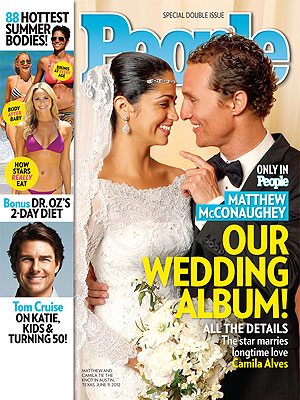
The third biggest search was for Matthew McConaughey and Camila Alves, who tied the knot during a private ceremony in Austin, Texas. Around 120 guests were on hand to celebration the longtime couple's love, including Reese Witherspoon, Woody Harrelson and Kenny Chesney.

As for most-searched images of the year, boy band One Direction ranked number one. Now that heartthrob Harry Styles has been linked to Taylor Swift, chances are they'll stay on top in 2013!

Meanwhile, the second most-searched image topic is something we've got plenty of.

Read More..

Brazen N.Y. killing of L.A. man leaves puzzling questions


NEW YORK — Brandon Woodard checked out of his midtown Manhattan hotel room Monday afternoon and emerged onto 58th Street a block from Columbus Circle.


As the 31-year-old Playa Vista man walked down the street, a man standing near a Lincoln sedan pulled a hood over his head as Woodard passed. A short time later, the two passed each other a second time. The man turned, pulled out a gun and shot Woodard at close range in the back of the head with a 9-millimeter pistol. He got back into the Lincoln, which pulled away.


The shooting has riveted New York and made for tabloid headlines. New York police have described the killing as an assassination-style attack.


But it has also reverberated in Los Angeles, where Woodard was raised and made his home.


Woodard grew up in Ladera Heights, played basketball at the exclusive Campbell Hall private high school in Studio City and graduated from Loyola Marymount University in 2003. His stepfather, Rod Wellington, said in an interview Tuesday that Woodard was pursuing a law degree at the University of West Los Angeles School of Law (school officials would not confirm if he was enrolled).


His stepfather described Woodard as a "loving son, a loving father and a loving brother." Woodard had a 4-year-old daughter and had a "great relationship" with the girl and her mother, he said.


"He was a good young man," Wellington said.


But court records revealed a more complex picture. Woodard has been arrested at least 20 times, according to New York Police Commissioner Raymond Kelly.


In 2004, Woodard was cited by Las Vegas police and summoned to court after a backstage scuffle with a security guard at an Usher concert at the Mandalay Bay Hotel and Casino. Police said Woodard had entered a restricted area and refused orders to leave.


He failed to appear in court in connection with the citation and a warrant was issued for his arrest. He was arrested in 2008 on that bench warrant but police could not immediately say how the matter was resolved.


Los Angeles authorities allege that in February 2008 he stole items from a Whole Foods Market and a Gelson's. He was sentenced to nine days in county jail and 200 hours of community service.


In December 2009, he pleaded no contest to a misdemeanor hit-and-run driving charge in Torrance. He received three years and a day in county jail.


Prosecutors said that he came back to court in 2010 and 2011 for probation violation hearings related to arrests for grand theft and battery against a former spouse as well as a spousal battery arrest in January. In April, prosecutors said his probation was completed.


The Los Angeles city attorney's office said there was a hearing related to the September 2010 spousal abuse allegation and noted that a bench warrant had been issued for Woodard's arrest as recently as July 3. It was not immediately clear how the warrant was resolved.


Officials with the Los Angeles County district attorney's office said Woodard was due in Beverly Hills Superior Court on Jan. 22 for a hearing in connection with a single charge of cocaine possession. He was originally charged in June.


Court records also indicated that Woodard's mother had been involved in multiple civil lawsuits related to her real estate business dealings. When Woodard was arrested in January, he listed his occupation as real estate.


Neither police nor family members said they have any idea for a motive.


On Tuesday, Kelly said detectives had made progress in their investigation from ballistics evidence and video surveillance footage that captured the shooting and the suspected getaway vehicle.


He added that investigators were pursuing all leads, including Woodard's criminal history and his family's real estate dealings.


Kelly said Woodard, who carried three cellphones, was believed to be a promoter of some kind, but did not elaborate.


It was not clear what brought Woodard to New York after he purchased a one-way ticket from California, Kelly said, or where he was going when he left the hotel. Woodard checked into the hotel Sunday and checked out about 1:15 p.m. the next day.


Kelly said it was clear the gunman lay in wait for Woodard and didn't act alone.


The suspect had a driver who, after the hit, pulled a silver or gray Lincoln onto 58th Street, Kelly said. Once the gunman was in the car, the vehicle headed south on 7th Avenue and disappeared. A short time later, a car "similar in description" was seen heading through the midtown tunnel eastbound into Queens, where the driver paid the toll with cash.


Investigators had the license plate of the vehicle, but Kelly declined to release the information, citing the ongoing investigation.


Kelly also said ballistics analysis linked the weapon to a 2009 shooting in Queens. The gun was fired at a residence, he said — no one was hurt and no arrests were made.


Kelly said Monday's crime was particularly surprising, given such a public setting.


"You can characterize it as either being brazen or foolhardy," he said.


tina.susman@latimes.comkate.mather@latimes.comandrew.blankstein@latimes.com

Times staff writers Adolfo Flores, Jeff Gottlieb and Frank Shyong contributed to this report. Susman reported from New York, Mather and Blankstein from Los Angeles.


Read More..