IHT Rendezvous: 'Secret' Arms Deals Provoke Germans

LONDON — There is at least one European export sector that continues to find a ready market around the world — weapons.

In the week in which the European Union received the Nobel Prize for Peace in Oslo, protestors in the Norwegian capital were not alone in pointing out the irony that its member states account for a third of global arms exports.

It is an irony that has a particular resonance in Germany right now, where the government’s decisions on a series of weapons deals have created unease among parliamentarians who complain they were kept in the dark.

Chancellor Angela Merkel, who was among the European leaders in Oslo for Monday’s Nobel award ceremony, has been described as the architect of a new doctrine to boost the country’s weapon sales.

“Germany used to be extremely careful about where it exported its weapons,” wrote Der Spiegel, the German magazine, which has been at the forefront of revelations about Berlin’s weapons policy. “In recent years, however, Chancellor Angela Merkel has shown a preference for sending high-tech armaments abroad rather than German soldiers — even if that means doing business with questionable regimes.”

Legislators and German media have seized on the magazine’s reporting of a secretive federal security committee, chaired by Ms. Merkel, allegedly involved in discussions of high-tech arms sales to countries that include Saudi Arabia, Qatar and Israel.

The latest is the possible sale of state-of-the-art Boxer armored vehicles to the Saudi Royal Guard, which is responsible for protecting the royal family.

Berlin has already approved the sale of up to 270 Leopard 2 tanks to the kingdom in a deal that provoked a fierce debate in Germany.

“Merkel wants to bolster countries that — at least from the German point of view — can provide for stability in their regions,” according to Der Spiegel, which warned it was a risky policy.

But the argument for boosting German weapons exports is economic as much as it is strategic.

“At the end of the day, it’s elementary budgeting,” according to Ben Knight of Deutsche Welle, the German broadcaster.

“Germany, along with most European countries, is in the middle of making drastic cuts in order to bring down its national debt,” he wrote last week. “So instead of costly military operations in the world’s many conflict zones, it has apparently decided to sell more weapons to ‘partner countries’ in those regions. What was once hefty expenditure suddenly becomes vast revenue.”

The so-called Merkel Doctrine has prompted an inevitable backlash from peace advocates and others concerned that German weapons could be used to suppress civil unrest.

Jürgen Grässlin, spokesman for a campaign that opposes arms exports, told Deutsche Welle, “The German government is essentially abetting mass murder in various conflict zones in the world.”

Legislators have also expressed concern that potentially far-reaching decisions are being taken by an inner circle of government without the benefit of parliamentary oversight.

In its latest report on what it described as the secret weapons deals, Der Spiegel this week quoted Markus Löning, the government’s human rights commissioner, as saying, “Citizens have a justified interest in being informed earlier on about arms sales.”

Germany is not alone, of course, in wanting to maximize its weapons sales.

Mark Bromley, a senior researcher at the Stockholm International Peace Research Institute, told Deutsche Welle, “A number of countries in western Europe are seeing declines in defense spending, which is having an impact on both defense acquisitions and production.”

“In an attempt to counter that, several governments — including Germany’s — are getting more focused on the promotion of arms exports to regions where budgets haven’t been cut, including parts of Asia, the Middle East, Africa, and South America.”

As my colleague Judy Dempsey wrote from Berlin earlier this year, not all these markets are in stable, conflict-free, democratic countries.

“This raises the question,” she wrote, “of how Europe can square its commitment to defending human rights with selling weapons to such countries.”
Read More..

John McAfee Deported from Guatemala, Back in U.S.


12/13/2012 at 07:50 AM EST


John McAfee in Guatemala


Guatemala's National Police/AP


The latest chapter in the John McAfee saga was written Wednesday, as the anti-virus software pioneer was released from Guatemalan custody and flown to Miami, where he was met by federal officials.

"It was the most gracious expulsion I've ever experienced," McAfee, 67, told ABC News. "Compared to my past two wives that expelled me, this isn't a terrible trip."

He added: "They took me out of my cell and put me on a freaking airplane. I had no choice in the matter."

McAfee is wanted for questioning in the November gunshot murder of a neighbor in Belize. He has denied any wrongdoing, yet fled Belize – going undercover in disguise for several weeks – and sought asylum in Guatemala.

Authorities there arrested him for entering the country illegally. But after an eventful detention, in which McAfee was briefly hospitalized after suffering a nervous collapse, the country evidently felt it prudent to return McAfee to his home soil.

It was not clear Wednesday whether authorities in Miami escorted McAfee away to shield him from the media or because they wanted to question him.

McAfee said he has retained a lawyer in the U.S. and plans to seek a visa for his 20-year-old Belizean girlfriend.

Read More..

$100-million gift to cover costs for 30-plus UCLA medical students


More than 30 incoming medical school students will get a full ride to UCLA's David Geffen School of Medicine thanks to a $100-million gift from the school's benefactor.


The donation by Geffen, a philanthropist and entertainment executive, will create a scholarship fund to cover the recipients' entire cost of medical school, including tuition, room and board, books and other expenses.


"It is a fantastic vote of confidence for higher education," said UCLA Chancellor Gene Block. "We're eternally grateful."


The gift, which will be announced Thursday, makes Geffen the largest individual donor to UCLA and to any single UC campus. In 2002, Geffen donated $200 million in unrestricted funds to the medical school. At the time, the campus was renamed in his honor.


Geffen, 69, declined to comment but said in a statement that students shouldn't be discouraged by the expense of medical school.


"The cost of a world-class medical education should not deter our future innovators, doctors and scientists from the path they hope to pursue," he said. "We need the students at this world-class institution to be driven by determination and the desire to do their best work and not by the fear of crushing debt. I hope in doing this that others will be inspired to do the same."


More than 85% of medical school students nationwide graduate with some debt. Among those, the average is $170,000, according to the Assn. of American Medical Colleges. That debt often influences graduates' career choices and has contributed to a shortage of primary care doctors, who often earn less than specialists. That shortage will be exacerbated by the aging of the population and the federal expansion of health coverage to the uninsured.


The UCLA scholarships are "unprecedented," said John Prescott, chief academic officer for the association. "My mouth dropped open when I saw this," he said. "It is going to create quite a legacy for the school."


The medical school's dean, A. Eugene Washington, said that he was thrilled by the donation and that it will free scholarship recipients from the tremendous burden of debt. The four-year tab for medical school students entering next fall could exceed $300,000 in tuition, housing, fees and other costs.


The scholarship will allow the school to free up some of the money it uses for financial aid and will enable students to follow their passions and become leading physicians and researchers without worrying about paying off loans, he said. "It is going to be for a group of the top students who will be freed up to pursue whatever their interests are," he said.


The David Geffen Medical Scholarship Fund will provide scholarships for up to 33 students beginning medical school in 2013. Up to three of the scholarships are available for students pursuing a joint doctorate and medical school degree. The students will be chosen based on merit, not financial need.


Block said the scholarships will help recruit more of the nation's top medical school applicants. Already, more than 7,500 applicants compete for 163 first-year slots at the school.


Emily Dubina, 25, a third-year medical school student at UCLA, received a partial scholarship from Geffen's original contribution. The new scholarships, she said, are an amazing opportunity that will take away a lot of the stress of day-to-day life. The recipients will be able to focus on becoming great physicians rather than on how much money they are spending on their education.


"I so wish they had that when I started," she said. "Life would have been much better."


Geffen began his career as a mail room worker at the William Morris Agency in Manhattan and later earned a fortune in the record and movie industries. He formed DreamWorks SKG in 1994 with Jeffrey Katzenberg and Steven Spielberg. He has also become a well-known benefactor, giving to such organizations as the Motion Picture and Television Fund and to the Geffen Playhouse.


anna.gorman@latimes.com


Read More..

Here’s the Pope’s First Tweet


The long wait is over and we’ve finally got the first words of Twitter wisdom from Pope Benedict XVI. 


Dear friends, I am pleased to get in touch with you through Twitter. Thank you for your generous response. I bless all of you from my heart.


Benedict XVI (@Pontifex) December 12, 2012


Ok, so not that funny, but it was all spelled right and we got blessed by a pope, so that’s a good start. And the Pope did actually send the message himself. Pope Benedict appeared on Wednesday morning for his regular weekly address in front of throngs of media and worshipers, and personally hit the tweet button himself on his iPad. Vatican officials say that before the end of the day he will be answering three questions that were submitted to the #askpontifex hashtag earlier this month. Here’s the first of those:


How can we celebrate the Year of Faith better in our daily lives?


— Benedict XVI (@Pontifex) December 12, 2012


By speaking with Jesus in prayer, listening to what he tells you in the Gospel and looking for him in those in need


— Benedict XVI (@Pontifex) December 12, 2012


He actually tweeted in Italian first and his other language accounts weren’t far behind. Follow @Pontifex for more 140 character sermons.


Social Media News Headlines – Yahoo! News


Read More..

Justin Timberlake & Jessica Biel (and One Direction) Had You Searching, Says Google


12/12/2012 at 08:00 AM EST


Justin Timberlake and Jessica Biel; Ryan Reynolds and Blake Lively


Everyone loves a wedding ... and Google has the data to prove it!

According to the Google Zeitgeist – an in-depth look at the stories, people and topics searched for in 2012 – PEOPLE brought you the top three searched for weddings in the United States.

Justin Timberlake and Jessica Biel's wedding took top honors as the most searched wedding of the year. Could it have been Biel's pink wedding dress? Or the couple's fun wedding photos?

Justin Timberlake & Jessica Biel (and One Direction) Had You Searching, Says Google| One Direction, Couples, Weddings, Blake Lively, Jessica Biel, Justin Timberlake, Matthew McConaughey, Ryan Reynolds

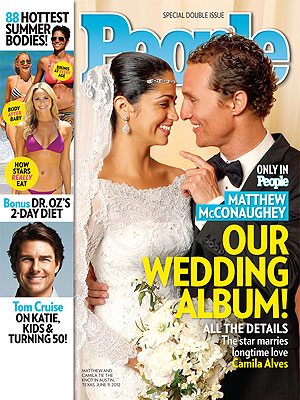
Matthew McConaughey and Camila Alves

Next up was Ryan Reynolds and Blake Lively's super-secret ceremony. Almost a year after the couple was first publicly linked, Lively and Reynolds escaped to Mt. Pleasant, S.C., just outside of Charleston, for an intimate wedding.

The third biggest search was for Matthew McConaughey and Camila Alves, who tied the knot during a private ceremony in Austin, Texas. Around 120 guests were on hand to celebration the longtime couple's love, including Reese Witherspoon, Woody Harrelson and Kenny Chesney.

As for most-searched images of the year, boy band One Direction ranked number one. Now that heartthrob Harry Styles has been linked to Taylor Swift, chances are they'll stay on top in 2013!

Meanwhile, the second most-searched image topic is something we've got plenty of.

Read More..

Brazen N.Y. killing of L.A. man leaves puzzling questions


NEW YORK — Brandon Woodard checked out of his midtown Manhattan hotel room Monday afternoon and emerged onto 58th Street a block from Columbus Circle.


As the 31-year-old Playa Vista man walked down the street, a man standing near a Lincoln sedan pulled a hood over his head as Woodard passed. A short time later, the two passed each other a second time. The man turned, pulled out a gun and shot Woodard at close range in the back of the head with a 9-millimeter pistol. He got back into the Lincoln, which pulled away.


The shooting has riveted New York and made for tabloid headlines. New York police have described the killing as an assassination-style attack.


But it has also reverberated in Los Angeles, where Woodard was raised and made his home.


Woodard grew up in Ladera Heights, played basketball at the exclusive Campbell Hall private high school in Studio City and graduated from Loyola Marymount University in 2003. His stepfather, Rod Wellington, said in an interview Tuesday that Woodard was pursuing a law degree at the University of West Los Angeles School of Law (school officials would not confirm if he was enrolled).


His stepfather described Woodard as a "loving son, a loving father and a loving brother." Woodard had a 4-year-old daughter and had a "great relationship" with the girl and her mother, he said.


"He was a good young man," Wellington said.


But court records revealed a more complex picture. Woodard has been arrested at least 20 times, according to New York Police Commissioner Raymond Kelly.


In 2004, Woodard was cited by Las Vegas police and summoned to court after a backstage scuffle with a security guard at an Usher concert at the Mandalay Bay Hotel and Casino. Police said Woodard had entered a restricted area and refused orders to leave.


He failed to appear in court in connection with the citation and a warrant was issued for his arrest. He was arrested in 2008 on that bench warrant but police could not immediately say how the matter was resolved.


Los Angeles authorities allege that in February 2008 he stole items from a Whole Foods Market and a Gelson's. He was sentenced to nine days in county jail and 200 hours of community service.


In December 2009, he pleaded no contest to a misdemeanor hit-and-run driving charge in Torrance. He received three years and a day in county jail.


Prosecutors said that he came back to court in 2010 and 2011 for probation violation hearings related to arrests for grand theft and battery against a former spouse as well as a spousal battery arrest in January. In April, prosecutors said his probation was completed.


The Los Angeles city attorney's office said there was a hearing related to the September 2010 spousal abuse allegation and noted that a bench warrant had been issued for Woodard's arrest as recently as July 3. It was not immediately clear how the warrant was resolved.


Officials with the Los Angeles County district attorney's office said Woodard was due in Beverly Hills Superior Court on Jan. 22 for a hearing in connection with a single charge of cocaine possession. He was originally charged in June.


Court records also indicated that Woodard's mother had been involved in multiple civil lawsuits related to her real estate business dealings. When Woodard was arrested in January, he listed his occupation as real estate.


Neither police nor family members said they have any idea for a motive.


On Tuesday, Kelly said detectives had made progress in their investigation from ballistics evidence and video surveillance footage that captured the shooting and the suspected getaway vehicle.


He added that investigators were pursuing all leads, including Woodard's criminal history and his family's real estate dealings.


Kelly said Woodard, who carried three cellphones, was believed to be a promoter of some kind, but did not elaborate.


It was not clear what brought Woodard to New York after he purchased a one-way ticket from California, Kelly said, or where he was going when he left the hotel. Woodard checked into the hotel Sunday and checked out about 1:15 p.m. the next day.


Kelly said it was clear the gunman lay in wait for Woodard and didn't act alone.


The suspect had a driver who, after the hit, pulled a silver or gray Lincoln onto 58th Street, Kelly said. Once the gunman was in the car, the vehicle headed south on 7th Avenue and disappeared. A short time later, a car "similar in description" was seen heading through the midtown tunnel eastbound into Queens, where the driver paid the toll with cash.


Investigators had the license plate of the vehicle, but Kelly declined to release the information, citing the ongoing investigation.


Kelly also said ballistics analysis linked the weapon to a 2009 shooting in Queens. The gun was fired at a residence, he said — no one was hurt and no arrests were made.


Kelly said Monday's crime was particularly surprising, given such a public setting.


"You can characterize it as either being brazen or foolhardy," he said.


tina.susman@latimes.comkate.mather@latimes.comandrew.blankstein@latimes.com

Times staff writers Adolfo Flores, Jeff Gottlieb and Frank Shyong contributed to this report. Susman reported from New York, Mather and Blankstein from Los Angeles.


Read More..

IHT Rendezvous: IHT Quick Read: Dec. 11

NEWS Besieged by economic woes and insistent questions about its future, the European Union accepted the Nobel Peace Prize on Monday with calls for further integration and a plea to remember the words of Abraham Lincoln as he addressed a divided nation at Gettysburg. Andrew Higgins reports from Oslo.

North Korea said on Monday that a technical issue had been found in the rocket it had planned to launch as early as this week to put a satellite in orbit, but that it still planned to try the launching by the end of the month. Choe Sang-Hun reports from Seoul.

Some Moroccans wonder whether the Arab Spring brought only cosmetic changes, questioning whether the king and his entourage gave up any of their power. Suzanne Daley reports from Tangier, Morocco.

Italian stock and bond prices fell on Monday after a weekend of political turmoil in Italy gave rise to fears that the country was headed for renewed instability. Shares of Italian banks, which are big holders of the government’s bonds, were among the hardest hit. Elisabetta Povoledo and David Jolly report.

Returns from Romania’s parliamentary elections on Monday gave an overwhelming victory to the center-left alliance of Prime Minister Victor Ponta, leaving the country poised for Round 2 of a political standoff that has destabilized one of the European Union’s newest and poorest members. Dan Bilefsky reports.

Huawei Technologies, a Chinese maker of telecommunications equipment, said on Monday that it planned to open a research and development center in Helsinki next year, accelerating its investments in Europe, where its business is expanding rapidly. Eric Pfanner reports from Paris.

FASHION The Chanel show that Karl Lagerfeld put on last week at Linlithgow Palace, near Edinburgh, was spectacular in every sense of the word. The burning braziers, sending quivering light over old stone, and the dinner held in a tented space, arising like magic on the hillside, were outshone only by an exceptional collection. Suzy Menkes reviews from Edinburgh.

ARTS “Tarzan” is only one of the shows that proves that even out-and-out flops on Broadway can go on to lucrative afterlives in Hamburg, as long as the shows have the spectacle and pageantry that theater producers here say enthrall a German audience. Patrick Healy reports from Hamburg.

SPORTS The essence of Lionel Messi is not in the bare statistic that now makes him the most prolific scorer of goals in a single year in the history of the game. It is in the way that he does it. Rob Hughes reports from London.

Read More..

BlackBerry Messenger 7 adds free Wi-Fi voice calling, split-screen multitasking and more


Research in Motion (RIMM) updated its BlackBerry Messenger to version 7 on Monday, adding a new key feature called “BBM Voice” that “will allow customers to make free voice calls to their BBM contacts around the world over a Wi-Fi connection.” BBM 7 also introduces multitasking with split-screen, which allows users to BBM, check email, or use other apps while on a BBM Voice call; new compatibility with Bluetooth headsets and accessories, 16 new emoticons; direct BBM Update Notification that provides in-app alerts when new versions of an app are available and an easier way to synchronize BBM profiles; Groups; and Contacts with BBIDs for simpler backup and restores. BBM 7 is available as a free update for all BlackBerry smartphones running BlackBerry 6 OS or higher. Users on BlackBerry OS 5 will get BBM Voice “early next year.”


“BBM began as a convenient and effective business messaging tool, and today it is an essential part of daily communications for customers around the world,” said T.A. McCann, RIM’s Vice President of BBM and Social Communities. ”Now, with BBM version 7, customers have a new option: they can text and talk with their BBM contacts near and far, for free.”


Get more from BGR.com: Follow us on Twitter, Facebook


Gadgets News Headlines – Yahoo! News


Read More..

Amanda Seyfried: 'Everyone Wants to Have Sex' with Channing Tatum


12/11/2012 at 08:00 AM EST


Amanda Seyfried has worked with a lot of good-looking men, but there's one in particular who rises to the top of her list.

"Channing [Tatum] was amazing. He's a superstar," the actress, 27, tells the January issue of InStyle about PEOPLE's 2012 Sexiest Man Alive.

Seyfried, who starred opposite Tatum in 2010's Dear John, is well-aware of her former costar's appeal.

"Everybody wants to have sex with him. And the only person he wants to have sex with is his wife, Jenna [Dewan-Tatum]. He's the most loyal husband," she says.

But while Tatum and Dewan-Tatum have managed to find marital bliss in spite of being in the spotlight, Seyfried admits she's not as lucky.

"The thing is, I can't date anybody without it being portrayed as a serious relationship in the tabloids. It sucks! Like Josh Hartnett and I were friends; we hung out, we dated. I don't actually have sex with every male I come into contact with," she says.

Another of Seyfried's costars getting a lot of attention is Anne Hathaway, who chopped off her locks and went on a drastic diet for her role in the upcoming Les Misérables, opening Dec. 25 (Seyfried plays Cosette, and Hathaway is Fantine).

"I would have done that for sure," Seyfried says of the haircut, but she draws the line there. "I probably wouldn't lose or gain weight for a role, though. I'm too health-conscious. And I don't think I could actually lose weight because I couldn't be on that kind of a diet. I would lose my mind."

Stripping for Lovelace

But playing the late porn-star-turned-feminist Linda Lovelace for the upcoming biopic Lovelace did have Seyfried focusing on her physique, which she doesn't mind.

"It's not about my body. It's not about me," she says of doing nude scenes. "You're playing somebody else. You're not going to believe a love scene if the people are dressed. You're not going to believe a stripper who has on a bra and underwear the whole time. At the same time, it has to do with how comfortable you are with letting people see your skin. For me, I'm okay with it."

Seyfried also says that being diagnosed with obsessive-compulsive disorder – which she manages with Lexapro – has positively contributed to her acting.

"I don't feel like I'm struggling with it. I think OCD is a part of me that protects me. It's also the part of me that I use in my job, in a positive way," she tells the magazine. "The only thing I'd like to get beyond is my fear of driving over bridges and through tunnels. I can't overcome it."

See Amanda Seyfried's best red carpet looks at Instyle.com

Read More..

New tests could hamper food outbreak detection


WASHINGTON (AP) — It's about to get faster and easier to diagnose food poisoning, but that progress for individual patients comes with a downside: It could hurt the nation's ability to spot and solve dangerous outbreaks.


Next-generation tests that promise to shave a few days off the time needed to tell whether E. coli, salmonella or other foodborne bacteria caused a patient's illness could reach medical laboratories as early as next year. That could allow doctors to treat sometimes deadly diseases much more quickly — an exciting development.


The problem: These new tests can't detect crucial differences between different subtypes of bacteria, as current tests can. And that fingerprint is what states and the federal government use to match sick people to a contaminated food. The older tests might be replaced by the new, more efficient ones.


"It's like a forensics lab. If somebody says a shot was fired, without the bullet you don't know where it came from," explained E. coli expert Dr. Phillip Tarr of Washington University School of Medicine in St. Louis.


The federal Centers for Disease Control and Prevention warns that losing the ability to literally take a germ's fingerprint could hamper efforts to keep food safe, and the agency is searching for solutions. According to CDC estimates, 1 in 6 Americans gets sick from foodborne illnesses each year, and 3,000 die.


"These improved tests for diagnosing patients could have the unintended consequence of reducing our ability to detect and investigate outbreaks, ultimately causing more people to become sick," said Dr. John Besser of the CDC.


That means outbreaks like the salmonella illnesses linked this fall to a variety of Trader Joe's peanut butter might not be identified that quickly — or at all.


It all comes down to what's called a bacterial culture — whether labs grow a sample of a patient's bacteria in an old-fashioned petri dish, or skip that step because the new tests don't require it.


Here's the way it works now: Someone with serious diarrhea visits the doctor, who gets a stool sample and sends it to a private testing laboratory. The lab cultures the sample, growing larger batches of any lurking bacteria to identify what's there. If disease-causing germs such as E. coli O157 or salmonella are found, they may be sent on to a public health laboratory for more sophisticated analysis to uncover their unique DNA patterns — their fingerprints.


Those fingerprints are posted to a national database, called PulseNet, that the CDC and state health officials use to look for food poisoning trends.


There are lots of garden-variety cases of salmonella every year, from runny eggs to a picnic lunch that sat out too long. But if a few people in, say, Baltimore have salmonella with the same molecular signature as some sick people in Cleveland, it's time to investigate, because scientists might be able narrow the outbreak to a particular food or company.


But culture-based testing takes time — as long as two to four days after the sample reaches the lab, which makes for a long wait if you're a sick patient.


What's in the pipeline? Tests that could detect many kinds of germs simultaneously instead of hunting one at a time — and within hours of reaching the lab — without first having to grow a culture. Those tests are expected to be approved as early as next year.


This isn't just a science debate, said Shari Shea, food safety director at the Association of Public Health Laboratories.


If you were the patient, "you'd want to know how you got sick," she said.


PulseNet has greatly improved the ability of regulators and the food industry to solve those mysteries since it was launched in the mid-1990s, helping to spot major outbreaks in ground beef, spinach, eggs and cantaloupe in recent years. Just this fall, PulseNet matched 42 different salmonella illnesses in 20 different states that were eventually traced to a variety of Trader Joe's peanut butter.


Food and Drug Administration officials who visited the plant where the peanut butter was made found salmonella contamination all over the facility, with several of the plant samples matching the fingerprint of the salmonella that made people sick. A New Mexico-based company, Sunland Inc., recalled hundreds of products that were shipped to large retailers all over the country, including Target, Safeway and other large grocery chains.


The source of those illnesses probably would have remained a mystery without the national database, since there weren't very many illnesses in any individual state.


To ensure that kind of crucial detective work isn't lost, the CDC is asking the medical community to send samples to labs to be cultured even when they perform a new, non-culture test.


But it's not clear who would pay for that extra step. Private labs only can perform the tests that a doctor orders, noted Dr. Jay M. Lieberman of Quest Diagnostics, one of the country's largest testing labs.


A few first-generation non-culture tests are already available. When private labs in Wisconsin use them, they frequently ship leftover samples to the state lab, which grows the bacteria itself. But as more private labs switch over after the next-generation rapid tests arrive, the Wisconsin State Laboratory of Hygiene will be hard-pressed to keep up with that extra work before it can do its main job — fingerprinting the bugs, said deputy director Dr. Dave Warshauer.


Stay tuned: Research is beginning to look for solutions that one day might allow rapid and in-depth looks at food poisoning causes in the same test.


"As molecular techniques evolve, you may be able to get the information you want from non-culture techniques," Lieberman said.


___


Follow Mary Clare Jalonick on Twitter at http://twitter.com/mcjalonick


Read More..