Smokers celebrate as Wash. legalizes marijuana


SEATTLE (AP) — The crowds of happy people lighting joints under Seattle's Space Needle early Thursday morning with nary a police officer in sight bespoke the new reality: Marijuana is legal under Washington state law.


Hundreds gathered at Seattle Center for a New Year's Eve-style countdown to 12 a.m., when the legalization measure passed by voters last month took effect. When the clock struck, they cheered and sparked up in unison.


A few dozen people gathered on a sidewalk outside the north Seattle headquarters of the annual Hempfest celebration and did the same, offering joints to reporters and blowing smoke into television news cameras.


"I feel like a kid in a candy store!" shouted Hempfest volunteer Darby Hageman. "It's all becoming real now!"


Washington and Colorado became the first states to vote to decriminalize and regulate the possession of an ounce or less of marijuana by adults over 21. Both measures call for setting up state licensing schemes for pot growers, processors and retail stores. Colorado's law is set to take effect by Jan. 5.


Technically, Washington's new marijuana law still forbids smoking pot in public, which remains punishable by a fine, like drinking in public. But pot fans wanted a party, and Seattle police weren't about to write them any tickets.


In another sweeping change for Washington, Gov. Chris Gregoire on Wednesday signed into law a measure that legalizes same-sex marriage. The state joins several others that allow gay and lesbian couples to wed.


The mood was festive in Seattle as dozens of gay and lesbian couples got in line to pick up marriage licenses at the King County auditor's office early Thursday.


King County and Thurston County announced they would open their auditors' offices shortly after midnight Wednesday to accommodate those who wanted to be among the first to get their licenses.


Kelly Middleton and her partner Amanda Dollente got in line at 4 p.m. Wednesday.


Hours later, as the line grew, volunteers distributed roses and a group of men and women serenaded the waiting line to the tune of "Chapel of Love."


Because the state has a three-day waiting period, the earliest that weddings can take place is Sunday.


In dealing with marijuana, the Seattle Police Department told its 1,300 officers on Wednesday, just before legalization took hold, that until further notice they shall not issue citations for public marijuana use.


Officers will be advising people not to smoke in public, police spokesman Jonah Spangenthal-Lee wrote on the SPD Blotter. "The police department believes that, under state law, you may responsibly get baked, order some pizzas and enjoy a 'Lord of the Rings' marathon in the privacy of your own home, if you want to."


He offered a catchy new directive referring to the film "The Big Lebowski," popular with many marijuana fans: "The Dude abides, and says 'take it inside!'"


"This is a big day because all our lives we've been living under the iron curtain of prohibition," said Hempfest director Vivian McPeak. "The whole world sees that prohibition just took a body blow."


Washington's new law decriminalizes possession of up to an ounce for those over 21, but for now selling marijuana remains illegal. I-502 gives the state a year to come up with a system of state-licensed growers, processors and retail stores, with the marijuana taxed 25 percent at each stage. Analysts have estimated that a legal pot market could bring Washington hundreds of millions of dollars a year in new tax revenue for schools, health care and basic government functions.


But marijuana remains illegal under federal law. That means federal agents can still arrest people for it, and it's banned from federal properties, including military bases and national parks.


The Justice Department has not said whether it will sue to try to block the regulatory schemes in Washington and Colorado from taking effect.


"The department's responsibility to enforce the Controlled Substances Act remains unchanged," said a statement issued Wednesday by the Seattle U.S. attorney's office. "Neither states nor the executive branch can nullify a statute passed by Congress."


The legal question is whether the establishment of a regulated marijuana market would "frustrate the purpose" of the federal pot prohibition, and many constitutional law scholars say it very likely would.


That leaves the political question of whether the administration wants to try to block the regulatory system, even though it would remain legal to possess up to an ounce of marijuana.


Alison Holcomb is the drug policy director of the American Civil Liberties Union of Washington and served as the campaign manager for New Approach Washington, which led the legalization drive. She said the voters clearly showed they're done with marijuana prohibition.


"New Approach Washington sponsors and the ACLU look forward to working with state and federal officials and to ensure the law is fully and fairly implemented," she said.


___


Johnson can be reached at https://twitter.com/GeneAPseattle


Read More..

Angel's statue offers solace to the grieving


Brandon Ty Garner died on the day he was born: July 1, 2011.


He came into the world at 24 weeks, 5 days. His lungs hadn't developed. He lived for six hours.


Very few people ever saw him.


Nearly a year and a half later, his parents remain swaddled in grief.


They visit his grave twice a week, even though it's an hour's drive from their Menifee home, and decorate it for each holiday he cannot share with them.


Recently they put up a small Christmas tree, full of colorful lights and ornaments. They surrounded it with stuffed animals, some wearing Santa hats.


Most people, they say, do not understand.


But on the night of Dec. 6, Janet and Ty Garner, both 33, were far from alone in their sorrow.


At El Toro Memorial Park in Lake Forest, in the children's section where Brandon is buried, several hundred people gathered before a bronze angel on a pedestal.


Some stood. Some sat in camp chairs. Extended families huddled on blankets on the grass.


They held candles. They listened to songs. They let the tears fall freely. They didn't try to hold them in.


And when the time came, they lined up to speak the names of their lost children and to lay down white carnations on long green stems.


Children's voices squeaked: "My sister Emma." "My big brother Jack." Adult voices cracked and quivered at "our baby girl," "my great-grandson," "our beautiful, beautiful boy."


One young couple grieved for newborn twins who had died the month before. An older man remembered his son, a fire captain, who had died years back, fully grown.


For nearly 20 minutes the names kept coming, one lapping over the next, as flowers filled the angel's open hands and blanketed her feet.


Similar scenes played out at more than 100 angels across the country.


The Dec. 6 tradition started with a self-published book, "The Christmas Box," which has become a staple of grief support groups.


In the 1993 story by Richard Paul Evans, a woman never stops mourning her daughter, who died at age 3 on that day.


The fictional child's grave features a statue of an angel.


After Evans had one erected in Salt Lake City, others followed. (The statues can be ordered through his website.)


Read More..

Changes to Agriculture Highlight Cuba’s Problems


HAVANA — Cuba’s liveliest experiment with capitalism unfolds every night in a dirt lot on the edge of the capital, where Truman-era trucks lugging fresh produce meet up with hundreds of buyers on creaking bicycle carts clutching wads of cash.


“This place, it feeds all of Havana,” said Misael Toledo, 37, who owns three small food stores in the city. “Before, you could only buy or sell in the markets of Fidel.”


The agriculture exchange, which sprang up last year after the Cuban government legalized a broader range of small businesses, is a vivid sign of both how much the country has changed, and of all the political and practical limitations that continue to hold it back.


President Raúl Castro has made agriculture priority No. 1 in his attempt to remake the country. He used his first major presidential address in 2007 to zero in on farming, describing weeds conquering fallow fields and the need to ensure that “anyone who wants can drink a glass of milk.”


No other industry has seen as much liberalization, with a steady rollout of incentives for farmers. And Mr. Castro has been explicit about his reasoning: increasing efficiency and food production to replace imports that cost Cuba hundreds of millions of dollars a year is a matter “of national security.”


Yet at this point, by most measures, the project has failed. Because of waste, poor management, policy constraints, transportation limits, theft and other problems, overall efficiency has dropped: many Cubans are actually seeing less food at private markets. That is the case despite an increase in the number of farmers and production gains for certain items. A recent study from the University of Havana showed that market prices jumped by nearly 20 percent in 2011 alone. And food imports increased to an estimated $1.7 billion last year, up from $1.4 billion in 2006.


“It’s the first instance of Cuba’s leader not being able to get done what he said he would,” said Jorge I. Domínguez, vice provost for international affairs at Harvard, who left Cuba as a boy. “The published statistical results are really very discouraging.”


A major cause: poor transportation, as trucks are in short supply, and the aging ones that exist often break down.


In 2009, hundreds of tons of tomatoes, part of a bumper crop that year, rotted because of a lack of transportation by the government agency charged with bringing food to processing centers.


“It’s worse when it rains,” said Javier González, 27, a farmer in Artemisa Province who described often seeing crops wilt and rot because they were not picked up.


Behind him were the 33 fertile, rent-free acres he had been granted as part of a program Mr. Castro introduced in 2008 to encourage rural residents to work the land. After clearing it himself and planting a variety of crops, Mr. Gonzalez said, he was doing relatively well and earned more last year than his father, who is a doctor, did.


But Cuba’s inefficiencies gnawed at him. Smart, strong, and ambitious, he had expansion plans in mind, even as in his hand he held a wrench. He was repairing a tractor part meant to be grading land. It was broken. Again.


The 1980s Soviet model tractor he bought from another farmer was as about good as it gets in Cuba. The Cuban government maintains a monopoly on selling anything new, and there simply is not enough of anything — fertilizer, or sometimes even machetes — to go around.


Government economists are aware of the problem. “If you give people land and no resources, it doesn’t matter what happens on the land,” said Joaquin Infante of the Havana-based Cuban National Association of Economists.


But Mr. Castro has refused to allow what many farmers and experts see as an obvious solution to the shortages of transportation and equipment: Let people import supplies on their own. “It’s about control,” said Philip Peters, a Cuba analyst with the Lexington Institute, a Virginia-based research group.


Other analysts agree, noting that though the agricultural reforms have gone farther than other changes — like those that allow for self-employment — they remain constrained by politics.


“The government is not ready to let go,” said Ted Henken, a Latin American studies professor at Baruch College. “They are sending the message that they want to let go, or are trying to let go, but what they have is still a mechanism of control.”


For many farmers, that explains why land leases last for 10 years with a chance to renew, not indefinitely or the 99 years offered to foreign developers. It is also why many farmers say they will not build homes on the land they lease, despite a concession this year to allow doing so.


Read More..

Michelle Branch's Daughter's Dream Job Is For the Birds - Literally


Celebrity Baby Blog


12/03/2012 at 02:00 PM ET


Prince William and Kate Expecting First Child
Sthanlee B. Mirador/Shooting Star


It seems as if Michelle Branch‘s daughter won’t be following in her musical footsteps any time soon.


While the Grammy Award winning singer/songwriter and her husband, bass player Teddy Landau, are no strangers to the stage, 7-year-old Owen Isabelle has found her niche in nature.


“I think because my husband and I are both musicians, she kind of feels like she has to do something a little bit more serious than her mom and dad,” the Cook Taste Eat host, 29, tells PEOPLE.


“Since she was 3 or 4 years old, she was always into science and dinosaurs and watching nature shows.”


In particular, all-things aviary has struck a chord with the little girl, who has already happily declared her future dream job.

“She’s obsessed with birds. She’s been begging to have a pet bird, which I will not allow,” saya Branch. “[Owen] claims she’s going to be an ornithologist when she grows up. Literally, it’s birds 24/7 — every book she wants is birds, stickers, drawings, clothes, everything.”


And as sure as she is of her pending career plans, Owen is just as confident in her political views. Happy to reveal who would have earned her support, the little girl has no qualms about divulging the deciding factor during the recent Presidential election.


“Around election time she said, ‘You know Mom, if I could vote, I would vote for Barack Obama.’ And I said, ‘Oh, really, that’s so interesting. Why?’” Branch recalls.


“And she said, ‘Well, remember that one time we got to go to the White House and meet him? I don’t vote for strangers.’”


');var brightcovevideoid = 1995568442001
');var targetVideoWidth = 300;brightcove.createExperiences();/* iPhone, iPad, iPod */if ((navigator.userAgent.match('iPhone')) || (navigator.userAgent.match('iPad')) || (navigator.userAgent.match('iPod')) || (location.search.indexOf('ipad=true') > -1)) { document.write('
Read More..

Smokers celebrate as Wash. legalizes marijuana


SEATTLE (AP) — The crowds of happy people lighting joints under Seattle's Space Needle early Thursday morning with nary a police officer in sight bespoke the new reality: Marijuana is legal under Washington state law.


Hundreds gathered at Seattle Center for a New Year's Eve-style countdown to 12 a.m., when the legalization measure passed by voters last month took effect. When the clock struck, they cheered and sparked up in unison.


A few dozen people gathered on a sidewalk outside the north Seattle headquarters of the annual Hempfest celebration and did the same, offering joints to reporters and blowing smoke into television news cameras.


"I feel like a kid in a candy store!" shouted Hempfest volunteer Darby Hageman. "It's all becoming real now!"


Washington and Colorado became the first states to vote to decriminalize and regulate the possession of an ounce or less of marijuana by adults over 21. Both measures call for setting up state licensing schemes for pot growers, processors and retail stores. Colorado's law is set to take effect by Jan. 5.


Technically, Washington's new marijuana law still forbids smoking pot in public, which remains punishable by a fine, like drinking in public. But pot fans wanted a party, and Seattle police weren't about to write them any tickets.


In another sweeping change for Washington, Gov. Chris Gregoire on Wednesday signed into law a measure that legalizes same-sex marriage. The state joins several others that allow gay and lesbian couples to wed.


The mood was festive in Seattle as dozens of gay and lesbian couples got in line to pick up marriage licenses at the King County auditor's office early Thursday.


King County and Thurston County announced they would open their auditors' offices shortly after midnight Wednesday to accommodate those who wanted to be among the first to get their licenses.


Kelly Middleton and her partner Amanda Dollente got in line at 4 p.m. Wednesday.


Hours later, as the line grew, volunteers distributed roses and a group of men and women serenaded the waiting line to the tune of "Chapel of Love."


Because the state has a three-day waiting period, the earliest that weddings can take place is Sunday.


In dealing with marijuana, the Seattle Police Department told its 1,300 officers on Wednesday, just before legalization took hold, that until further notice they shall not issue citations for public marijuana use.


Officers will be advising people not to smoke in public, police spokesman Jonah Spangenthal-Lee wrote on the SPD Blotter. "The police department believes that, under state law, you may responsibly get baked, order some pizzas and enjoy a 'Lord of the Rings' marathon in the privacy of your own home, if you want to."


He offered a catchy new directive referring to the film "The Big Lebowski," popular with many marijuana fans: "The Dude abides, and says 'take it inside!'"


"This is a big day because all our lives we've been living under the iron curtain of prohibition," said Hempfest director Vivian McPeak. "The whole world sees that prohibition just took a body blow."


Washington's new law decriminalizes possession of up to an ounce for those over 21, but for now selling marijuana remains illegal. I-502 gives the state a year to come up with a system of state-licensed growers, processors and retail stores, with the marijuana taxed 25 percent at each stage. Analysts have estimated that a legal pot market could bring Washington hundreds of millions of dollars a year in new tax revenue for schools, health care and basic government functions.


But marijuana remains illegal under federal law. That means federal agents can still arrest people for it, and it's banned from federal properties, including military bases and national parks.


The Justice Department has not said whether it will sue to try to block the regulatory schemes in Washington and Colorado from taking effect.


"The department's responsibility to enforce the Controlled Substances Act remains unchanged," said a statement issued Wednesday by the Seattle U.S. attorney's office. "Neither states nor the executive branch can nullify a statute passed by Congress."


The legal question is whether the establishment of a regulated marijuana market would "frustrate the purpose" of the federal pot prohibition, and many constitutional law scholars say it very likely would.


That leaves the political question of whether the administration wants to try to block the regulatory system, even though it would remain legal to possess up to an ounce of marijuana.


Alison Holcomb is the drug policy director of the American Civil Liberties Union of Washington and served as the campaign manager for New Approach Washington, which led the legalization drive. She said the voters clearly showed they're done with marijuana prohibition.


"New Approach Washington sponsors and the ACLU look forward to working with state and federal officials and to ensure the law is fully and fairly implemented," she said.


___


Johnson can be reached at https://twitter.com/GeneAPseattle

Read More..

Gulp! The high cost of Big Soda's victory


Big Soda spent big bucks. That's how it defeated ballot measures to create soda taxes in two California towns.


In Richmond, in the Bay Area, and in El Monte, east of Los Angeles, the measures would have added a penny-an-ounce tax on soda. Had the taxes passed, they were projected to raise millions of dollars aimed at funding local recreation and nutrition activities to fight childhood obesity.


To bury these towns in an avalanche of billboards, mailers and ads, the American Beverage Assn. and friends wrote checks totaling $4.1 million. Supporters of the measures, primarily children's health advocates, spent $114,000.


Big Soda spent $115 per vote in Richmond and El Monte. In comparison, supporters of Proposition 30, the governor's tax measure, spent $5.85 per vote.


It was the most expensive campaign battle ever waged in El Monte. In Richmond, 99% of the funds used to defeat the soda tax poured in from out of state, 95% of them from Washington lobbying firms. Not a single cent for the "no" campaign came from an individual citizen.


Big Soda's sky-high spending was a new low for California. Its political strategists have surely been slapping each other on the back, proud of the strong message they sent to other cities that might consider similar measures.


Richmond and El Monte residents probably would have appreciated it more if Big Soda had spent that pile of cash in a different way, for example, to keep California kids healthy and active. Here's what that $4.1 million could have bought.


Daniel Zingale is a senior vice president at the California Endowment and a leader of its Health Happens Here campaign (www.healthhappenshere.org).


Sources for the graphic (click the image to the left for a larger version):


1,2. Most recent available campaign-funding disclosure forms (through Oct. 20 for El Monte measure; through Nov. 1 for Richmond measure)


3. Vote totals (as of Dec. 5): Los Angeles County and Contra Costa County election officials; for Proposition 30, California secretary of state.


Expenditures: Most recent available data from campaign-funding disclosure forms; for Proposition 30, California secretary of state.


4. MapLight Voter's Edge (Richmond)


5. $100,000 per playground — KaBoom!, Washington


6. $50,000 per mile of bike lane — Pedestrian and Bicycle Information Center, Chapel Hill, N.C.


7. $3,700 per fountain — Global Tap, Chicago


8. California Food Policy Advocates, Oakland


9. Richmond Steelers Youth Football League, Richmond


10. $185.02 per checkup — 2011 fee survey, American Dental Assn., Chicago


11. $31.50 per box of vegetables — Farm Fresh to You, Capay, Calif.


Households in El Monte and Richmond — U.S. Census, 2010


12. $1,000 per Swing-N-Slide Chesapeake Residential Wood Playset — Lowe's, online


13. $1,400 per Kwik Goal Academy soccer goal — Dick's Sporting Goods, online


14. $12.90 per Altus jump rope — Wal-Mart, online


Read More..

In the Ashes, Evidence of Failures in Oversight

A sample shirt with the Canyon Creek label hung inside the charred remains of a factory in Karachi where at least 262 workers died in a fire in September.


The garment factory, owned by Arshad and Shahid Bhaila, who are brothers, had been certified as safe three weeks before the blaze.

Read More..

Red Hat divulgará los resultados del tercer trimestre del año fiscal 2013 a través de un webcast


Red Hat Inc. (NYSE: RHT), proveedor líder mundial de soluciones de código abierto, analizará los resultados del tercer trimestre del año fiscal 2013 el jueves, 20 de diciembre de 2012, a partir de las 5:00 p. m., hora del Este.


Se puede acceder a un webcast en vivo en la página de Relaciones con los Inversores de Red Hat en http://investors.redhat.com y la reproducción se encontrará disponible a partir de aproximadamente dos horas luego de finalizados los eventos en vivo.


Acerca de Red Hat, Inc.


Red Hat es el proveedor líder mundial de soluciones de software de código abierto; utiliza un enfoque basado en la comunidad para tecnologías confiables y de alto rendimiento en la nube, Linux, middleware, almacenamiento y virtualización. Red Hat también ofrece servicios galardonados de consultoría asistencia y capacitación. Como centro de conectividad de una red global de empresas, socios y comunidades de código abierto, Red Hat ayuda a crear tecnologías relevantes e innovadoras que liberan recursos para el crecimiento y preparan a los clientes para el futuro de la tecnología de la información. Obtenga más información en: http://www.redhat.com.


Declaraciones a futuro


Ciertas declaraciones del presente comunicado de prensa pueden constituir “declaraciones a futuro” dentro del significado de la Ley de Reforma de Litigios Sobre Valores Privados (Private Securities Litigation Reform Act) de los EE. UU. de 1995. Las declaraciones a futuro ofrecen expectativas actuales de eventos futuros en base a determinados supuestos e incluyen cualquier declaración que no se relaciona directamente con cualquier hecho actual o histórico. Los resultados reales pueden diferir sustancialmente de los indicados por dichas declaraciones a futuro, como resultado de varios factores importantes, incluso: riesgos relacionados con retrasos o reducciones en el gasto en tecnología de la información; los efectos de la consolidación del sector; la capacidad de la Compañía de competir en forma eficaz; la incertidumbre y los resultados adversos en litigios y acuerdos relacionados; la integración de adquisiciones y la capacidad de comercializar en forma exitosa las tecnologías y productos adquiridos; la incapacidad de proteger adecuadamente la propiedad intelectual de la Compañía y el posible incumplimiento o violación de reclamaciones de licencia o relacionadas con la propiedad intelectual de terceros; la capacidad de entregar y estimular la demanda de nuevos productos e innovaciones tecnológicas en forma oportuna; los riesgos relacionados con la vulnerabilidad de la seguridad de datos y de información; la gestión ineficaz de, y control sobre las operaciones internacionales y el crecimiento de la Compañía; las fluctuaciones en las tasas de cambio; y cambios en el personal clave y una dependencia del mismo, así como otros factores presentes en nuestro más reciente Informe Trimestral en el formulario 10-Q (copias del cual se encuentran disponibles en el sitio Web de la Comisión de Bolsa y Valores en http://www.sec.gov), incluidos los que se encuentran en el título “Factores de riesgo” y “Análisis y Discusiones de la Gerencia sobre Condiciones Financieras y Resultados de Operaciones”. Además de estos factores, el desempeño futuro real, y los resultados pueden diferir sustancialmente debido a más factores generales que incluyen (entre otros) las condiciones generales del mercado y de la industria y las tasas de crecimiento, las condiciones económicas y políticas, los cambios en las políticas públicas y gubernamentales y el impacto de los desastres naturales como terremotos e inundaciones. Las declaraciones a futuro incluidas en este comunicado de prensa representan las opiniones de la Compañía a la fecha de este comunicado de prensa y estas ideas podrían cambiar. Sin embargo, si bien la Compañía puede elegir actualizar estas declaraciones a futuro en algún momento, la Compañía en forma específica renuncia a cualquier obligación de hacerlo. No debe confiar en estas declaraciones a futuro como si representaran las opiniones de la empresa a partir de cualquier fecha posterior de la fecha de este comunicado de prensa.


Red Hat y JBoss son marcas comerciales de Red Hat, Inc. registradas en los EE. UU. y en otros países. Linux® es la marca comercial registrada de Linus Torvalds en los EE. UU. y en otros países.


El texto original en el idioma fuente de este comunicado es la versión oficial autorizada. Las traducciones solo se suministran como adaptación y deben cotejarse con el texto en el idioma fuente, que es la única versión del texto que tendrá un efecto legal.


Linux/Open Source News Headlines – Yahoo! News


Read More..

Susan Powell's Father-in-Law Secretly Took 4,500 Pictures of Her


12/07/2012 at 07:30 PM EST


Wrapping up a year that has brought unimaginable frustration and heartbreak, Susan Powell's family marked the three-year anniversary of her disappearance at a ceremony this week near where her two sons are buried.

"It's a hard time of year," Susan's father, Chuck Cox, tells PEOPLE. "Our daughter's still missing. Someday, we will find out what happened to her."

He added that he is not sure what to make of a West Valley City, Utah, police announcement Thursday that their investigation into Susan's Dec. 6, 2009 disappearance remains active but "has been scaled down," with a reduction in the number of full-time investigators working the case.

The announcement came at the same time that more evidence emerged of the alleged obsession Susan's father-in-law, Steven Powell, had toward her. Authorities released nearly 4,500 pictures that they say he secretly took of her at home and elsewhere.

Cox says he's hopeful that the police are still doing everything possible to solve Susan's case, but he hasn't ruled out suing the department for failing to arrest Susan's husband, Josh Powell, for her murder.

More than two years after Susan's disappearance, Josh on Feb. 5 murdered the couple's two sons and committed suicide by blowing up his house.

Cox's lawyer, Anne Bremner, says Cox "goes back and forth" over whether to sue West Valley City. "He wants them to find her. A lawsuit can have a chilling affect on things."

Cox and Bremner say they do plan to file a lawsuit against the state of Washington for continuing to give Josh visitation with his children despite what they claim were mounting concerns regarding his mental stability.

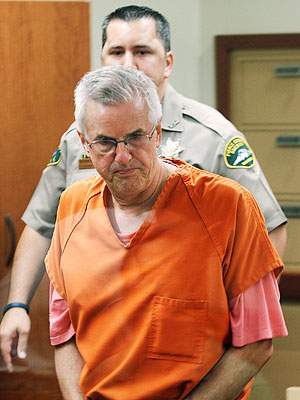
Although Cox and the police believe that Josh Powell knew more than anyone what happened to Susan, they also strongly suspect that his father, Steven Powell, should still be looked at more closely.

Susan Powell's Father-in-Law Secretly Took 4,500 Pictures of Her| True Crime, Susan Powell

Steven Powell

Ted S. Warren / AP

The Coxes hoped Steve Powell's voyeurism trial in May would unearth some answers but it did not. Powell invoked his Fifth Amendment right against self-incrimination when asked in jail about Susan.

In numerous interviews with PEOPLE, Steve and Josh Powell denied any involvement in Susan's disappearance and have suggested that she ran off with another man.

Steve Powell was prosecuted for surreptitiously photographing his neighbor's young daughters (and is serving a 30-month sentence), but the investigation also unearthed journals in which Powell described his interest in his daughter-in-law, as well as the thousands of photos, which were released Thursday to the Associated Press.

In a journal entry, Steven Powell recalls a sexually charged dream in which Susan asks him, “Do you think I would make a good wife for you?” None of the pictures show Susan naked, although there are images of her crotch and backside.

"We think he knows exactly where our daughter is," Cox says.

Once Susan disappeared, Josh sold the family's home in Utah and moved with the boys into Steven Powell's house in Puyallup, Wash., only about two miles from the Cox family.

On Thursday, families streamed to Puyallup’s Woodbine Cemetery to remember the Powell boys and other children who died tragically and to dedicate a memorial: a bronze angel inspired by the novella The Christmas Box, in which strangers learn the value of love following a child’s death.

The novella's author, Richard Paul Evans, also attended the dedication. The memorial is on a hill overlooking the boys' gravesites 75 yards away.

"We get a lot of support from a lot of people and we're going to make it through," Cox says.

Read More..

Smokers celebrate as Wash. legalizes marijuana


SEATTLE (AP) — The crowds of happy people lighting joints under Seattle's Space Needle early Thursday morning with nary a police officer in sight bespoke the new reality: Marijuana is legal under Washington state law.


Hundreds gathered at Seattle Center for a New Year's Eve-style countdown to 12 a.m., when the legalization measure passed by voters last month took effect. When the clock struck, they cheered and sparked up in unison.


A few dozen people gathered on a sidewalk outside the north Seattle headquarters of the annual Hempfest celebration and did the same, offering joints to reporters and blowing smoke into television news cameras.


"I feel like a kid in a candy store!" shouted Hempfest volunteer Darby Hageman. "It's all becoming real now!"


Washington and Colorado became the first states to vote to decriminalize and regulate the possession of an ounce or less of marijuana by adults over 21. Both measures call for setting up state licensing schemes for pot growers, processors and retail stores. Colorado's law is set to take effect by Jan. 5.


Technically, Washington's new marijuana law still forbids smoking pot in public, which remains punishable by a fine, like drinking in public. But pot fans wanted a party, and Seattle police weren't about to write them any tickets.


In another sweeping change for Washington, Gov. Chris Gregoire on Wednesday signed into law a measure that legalizes same-sex marriage. The state joins several others that allow gay and lesbian couples to wed.


The mood was festive in Seattle as dozens of gay and lesbian couples got in line to pick up marriage licenses at the King County auditor's office early Thursday.


King County and Thurston County announced they would open their auditors' offices shortly after midnight Wednesday to accommodate those who wanted to be among the first to get their licenses.


Kelly Middleton and her partner Amanda Dollente got in line at 4 p.m. Wednesday.


Hours later, as the line grew, volunteers distributed roses and a group of men and women serenaded the waiting line to the tune of "Chapel of Love."


Because the state has a three-day waiting period, the earliest that weddings can take place is Sunday.


In dealing with marijuana, the Seattle Police Department told its 1,300 officers on Wednesday, just before legalization took hold, that until further notice they shall not issue citations for public marijuana use.


Officers will be advising people not to smoke in public, police spokesman Jonah Spangenthal-Lee wrote on the SPD Blotter. "The police department believes that, under state law, you may responsibly get baked, order some pizzas and enjoy a 'Lord of the Rings' marathon in the privacy of your own home, if you want to."


He offered a catchy new directive referring to the film "The Big Lebowski," popular with many marijuana fans: "The Dude abides, and says 'take it inside!'"


"This is a big day because all our lives we've been living under the iron curtain of prohibition," said Hempfest director Vivian McPeak. "The whole world sees that prohibition just took a body blow."


Washington's new law decriminalizes possession of up to an ounce for those over 21, but for now selling marijuana remains illegal. I-502 gives the state a year to come up with a system of state-licensed growers, processors and retail stores, with the marijuana taxed 25 percent at each stage. Analysts have estimated that a legal pot market could bring Washington hundreds of millions of dollars a year in new tax revenue for schools, health care and basic government functions.


But marijuana remains illegal under federal law. That means federal agents can still arrest people for it, and it's banned from federal properties, including military bases and national parks.


The Justice Department has not said whether it will sue to try to block the regulatory schemes in Washington and Colorado from taking effect.


"The department's responsibility to enforce the Controlled Substances Act remains unchanged," said a statement issued Wednesday by the Seattle U.S. attorney's office. "Neither states nor the executive branch can nullify a statute passed by Congress."


The legal question is whether the establishment of a regulated marijuana market would "frustrate the purpose" of the federal pot prohibition, and many constitutional law scholars say it very likely would.


That leaves the political question of whether the administration wants to try to block the regulatory system, even though it would remain legal to possess up to an ounce of marijuana.


Alison Holcomb is the drug policy director of the American Civil Liberties Union of Washington and served as the campaign manager for New Approach Washington, which led the legalization drive. She said the voters clearly showed they're done with marijuana prohibition.


"New Approach Washington sponsors and the ACLU look forward to working with state and federal officials and to ensure the law is fully and fairly implemented," she said.


___


Johnson can be reached at https://twitter.com/GeneAPseattle


Read More..